
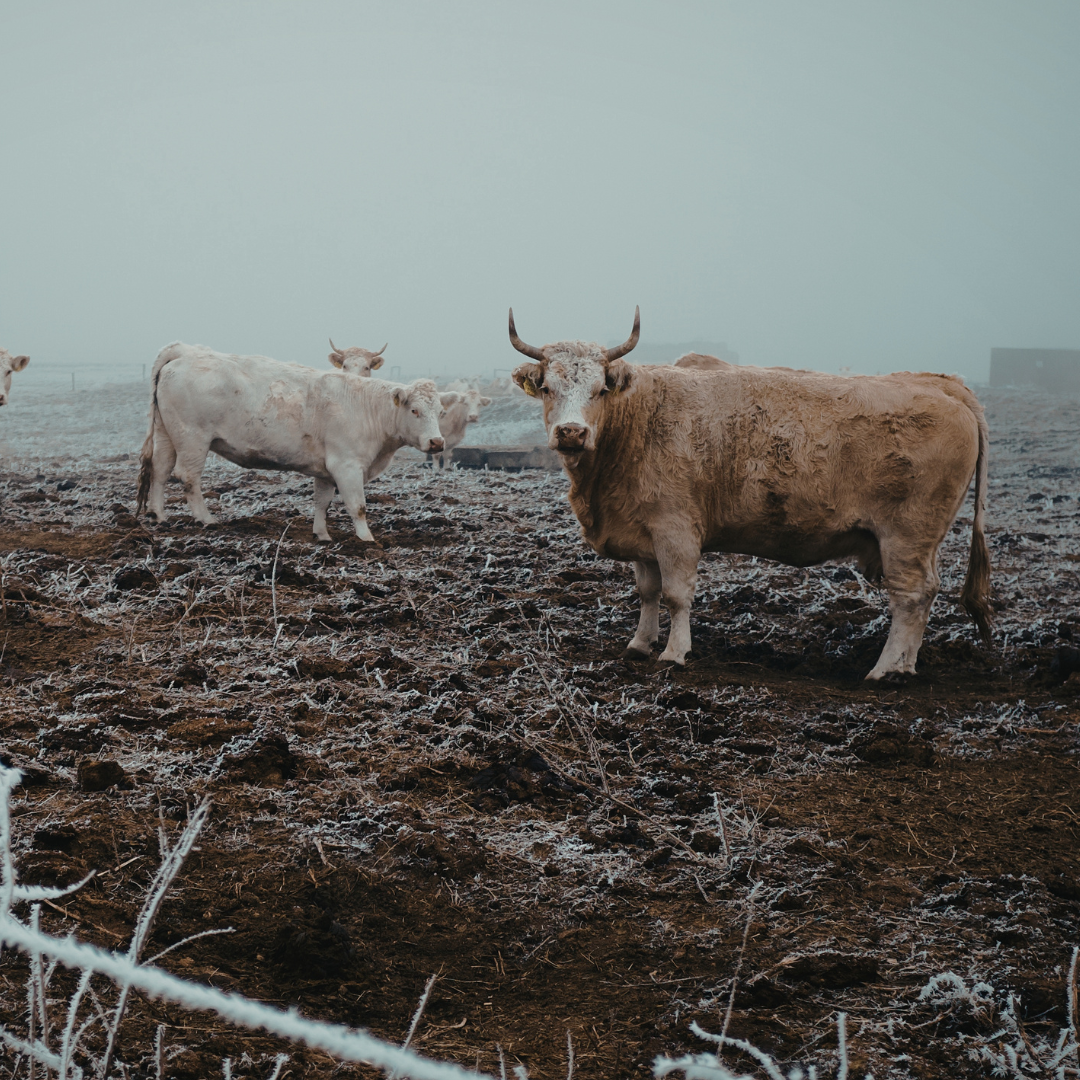
 Are you wondering how to feed livestock in winter? When the season settles over Fredericksburg, the temperature drops and pastures go dormant, signaling a critical time for livestock owners. While Texas winters aren’t the harshest, the combination of cold snaps, wind, and rain can significantly impact your herd’s health. Adjusting your feeding program is the single most effective way to help your animals thrive until spring returns.
Maintaining body condition during these colder months requires a proactive approach. Animals burn more calories simply to stay warm, meaning their nutritional needs change drastically compared to summer. Here is how to manage winter livestock feeding effectively.
1. Increase Forage Intake
The best heater for your livestock is their own digestion. When animals digest fiber, the process generates internal body heat.
- Prioritize Hay: High-quality hay should be the foundation of your winter feeding program. Ensure your animals have access to plenty of forage, especially during freezing nights.
- Check Quality: Not all hay provides equal nutrition. If your hay is lower in protein, you may need to supplement to ensure your animals get what they need. Testing your hay is a great way to know exactly what nutrients you are providing.
2. Adjust for Energy Needs
As the thermometer dips, energy requirements skyrocket. An animal with a healthy layer of fat has better insulation against the cold.
- Monitor Body Condition: Keep a close eye on your herd’s weight. If you see ribs or hip bones becoming prominent, you need to increase their energy intake immediately. It is much harder to put weight back on an animal in the cold than to maintain it.
- Supplement with Grain or Cubes: When hay isn’t enough, adding high-energy grain or protein cubes provides the extra calories needed to maintain body temperature and condition. This is especially important for pregnant or lactating animals, whose energy needs are already high.
3. Don’t Forget Hydration
Water is just as crucial in January as it is in July. Dehydration is a major winter risk because animals drink less when water is freezing cold.
- Keep Water Accessible: Check troughs daily to break ice. If possible, use tank heaters to keep water at a drinkable temperature.
- Encourage Drinking: Animals eating dry hay need more water to digest it properly. Adequate hydration prevents impaction colic and ensures nutrients are absorbed efficiently.
4. Provide Essential Minerals
Winter grazing often lacks the vitamins and minerals found in lush green grass. A good mineral program bridges this gap.
- Use a Mineral Supplement: Provide a free-choice mineral supplement designed for your specific livestock and region. This supports their immune system, which is vital for fighting off winter respiratory illnesses.
Your Winter Feed Headquarters
A solid winter feeding strategy keeps your livestock healthy, warm, and ready for the spring season. Don’t let the cold catch your herd unprepared.
For all your livestock feeding needs, visit Lochte Feed. Located in Fredericksburg, Texas, we stock a wide variety of high-quality hay, protein cubes, minerals, and grains to support cold weather livestock care. Our team can help you select the right products to keep your animals in peak condition. S