
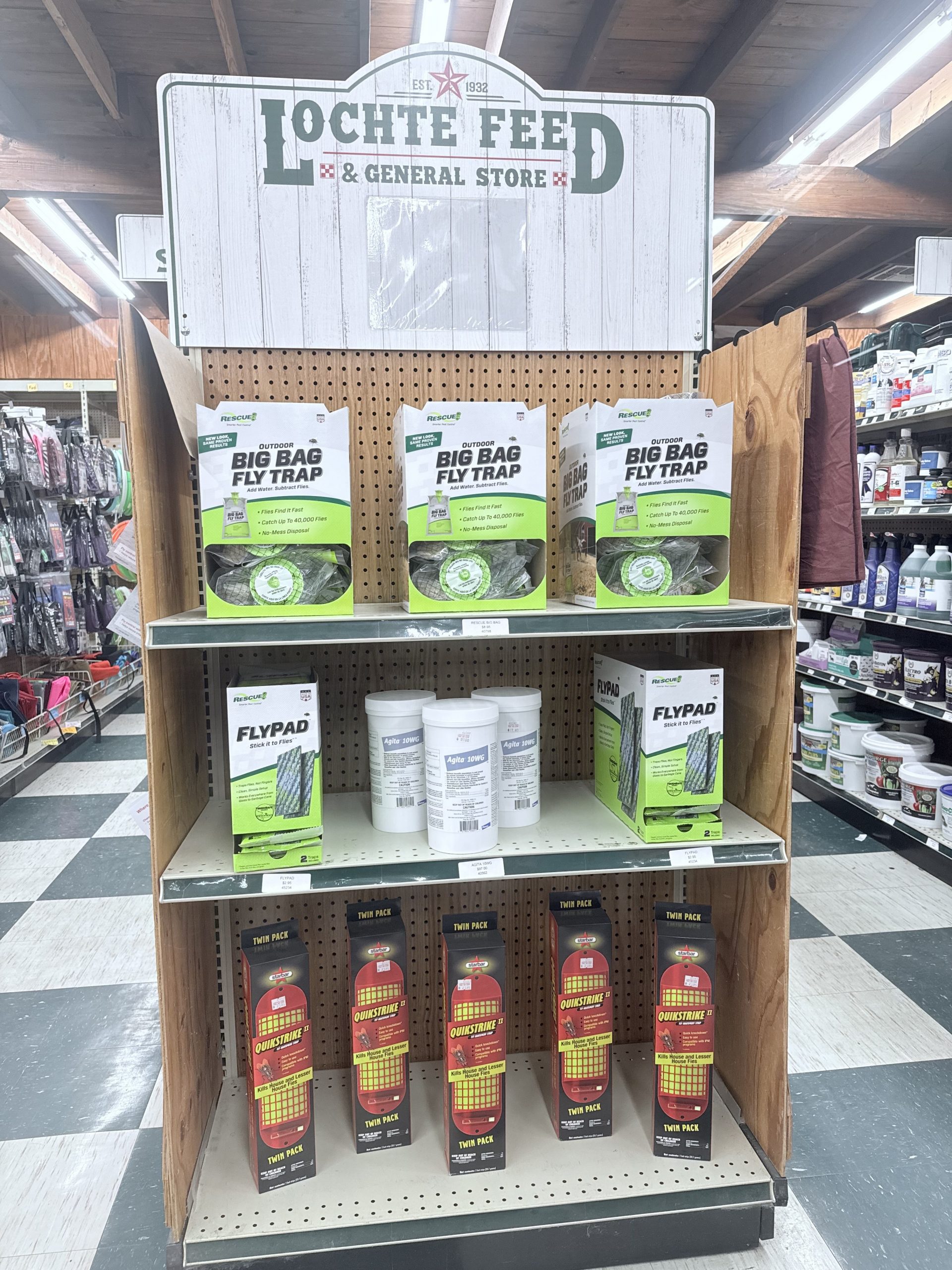
 It’s time to learn how to prevent flies and pests on your farm. As temperatures rise in May, so does the population of unwanted guests on your property. Flies, mosquitoes, and other pests are more than just a nuisance; they pose a genuine threat to your livestock’s health and your farm’s productivity. In the Texas Hill Country, where warm weather arrives early and stays late, effective pest management is a crucial part of daily farm life.
Controlling pests requires a multi-faceted approach. You cannot rely on a single spray to solve the problem. Instead, you need a strategy that combines sanitation, biological controls, and chemical treatments. Here are practical ways to keep the bugs at bay this season.
1. Start with Sanitation
The most effective way to control flies is to remove their breeding grounds. Flies lay eggs in organic matter, so keeping your farm clean disrupts their life cycle before it starts.
- Manage Manure: Remove manure from barns and stalls daily. Spread it thinly in pastures to dry out quickly or compost it properly to generate heat that kills fly larvae.
- Clean Up Spilled Feed: Rotting feed is a magnet for pests. Sweep up spilled grain around troughs and storage bins immediately.
- Eliminate Standing Water: Mosquitoes need stagnant water to breed. Check for old tires, buckets, or clogged gutters that collect rainwater. Refresh water troughs regularly to keep the water moving and clean.
2. Use Biological and Physical Controls
Nature offers some powerful tools for pest management that reduce your reliance on chemicals.
- Fly Predators: These tiny, beneficial insects feed on fly larvae but do not bother humans or animals. Releasing them early in the season can significantly reduce the future fly population.
- Traps and Tapes: Sticky tapes and fly traps are excellent for reducing adult fly numbers in enclosed areas like feed rooms or barns. Place them away from livestock to draw pests away from your animals.
- Fans: Flies are weak fliers. Installing large fans in barns creates airflow that makes it difficult for flies to land on your animals, providing immediate relief.
3. Implement Chemical Controls Wisely
When natural methods aren’t enough, chemical controls provide the heavy artillery needed to protect your herd.
- Pour-Ons and Sprays: Use livestock-safe sprays and pour-on treatments to repel flies directly on the animal. Rotate the active ingredients you use to prevent pests from building resistance.
- Feed-Through Inhibitors: These supplements contain compounds that pass through the animal’s digestive system and end up in the manure, preventing fly larvae from developing. It is an effortless way to stop the next generation of pests.
- Ear Tags: Insecticide-impregnated ear tags release a steady dose of repellent over several months, offering long-term protection for cattle on pasture.
Your Fly Control Headquarters in Fredericksburg
Don’t let pests eat into your profits or make your animals miserable. A proactive plan keeps your farm comfortable and productive all summer long.
For effective farm pest control tips and products, visit Lochte Feed. Located in Fredericksburg, Texas, we stock a wide range of sprays, feed-throughs, ear tags, and traps to handle any infestation. Our team understands the challenges of fly control and can help you build a defense strategy that works.