 Harvesting hay takes hard work, time, and money, so it’s important you know our top tips for storing hay in hot weather. After cutting, baling, and hauling it, the last thing you want is to lose your investment to spoilage or, worse, a barn fire. In Fredericksburg, the intense summer heat combined with occasional humidity creates a risky environment for stored forage. Proper storage is essential to maintain nutritional quality and ensure safety on your farm.
Whether you store square bales for horses or round bales for cattle, how you manage your hay barn in July and August matters. Follow these tips for storing hay in summer to keep your supply fresh and safe.
1. Ensure Proper Curing Before Storage
The most critical step in safe storage happens before the hay even enters the barn. Storing hay that is too wet is the number one cause of mold and spontaneous combustion.
- Check Moisture Levels: Ensure hay is cured to the correct moisture content—generally under 15% for large round bales and under 20% for small square bales.
- Use a Moisture Tester: Don’t guess. Use a probe to test multiple bales from different parts of the field. If the moisture is too high, leave the bales outside to dry further before stacking them indoors.
2. Master the Art of Stacking
How you stack your bales directly impacts airflow and heat dissipation. A tight stack might save space, but it traps heat and moisture, creating a perfect breeding ground for mold and bacteria.
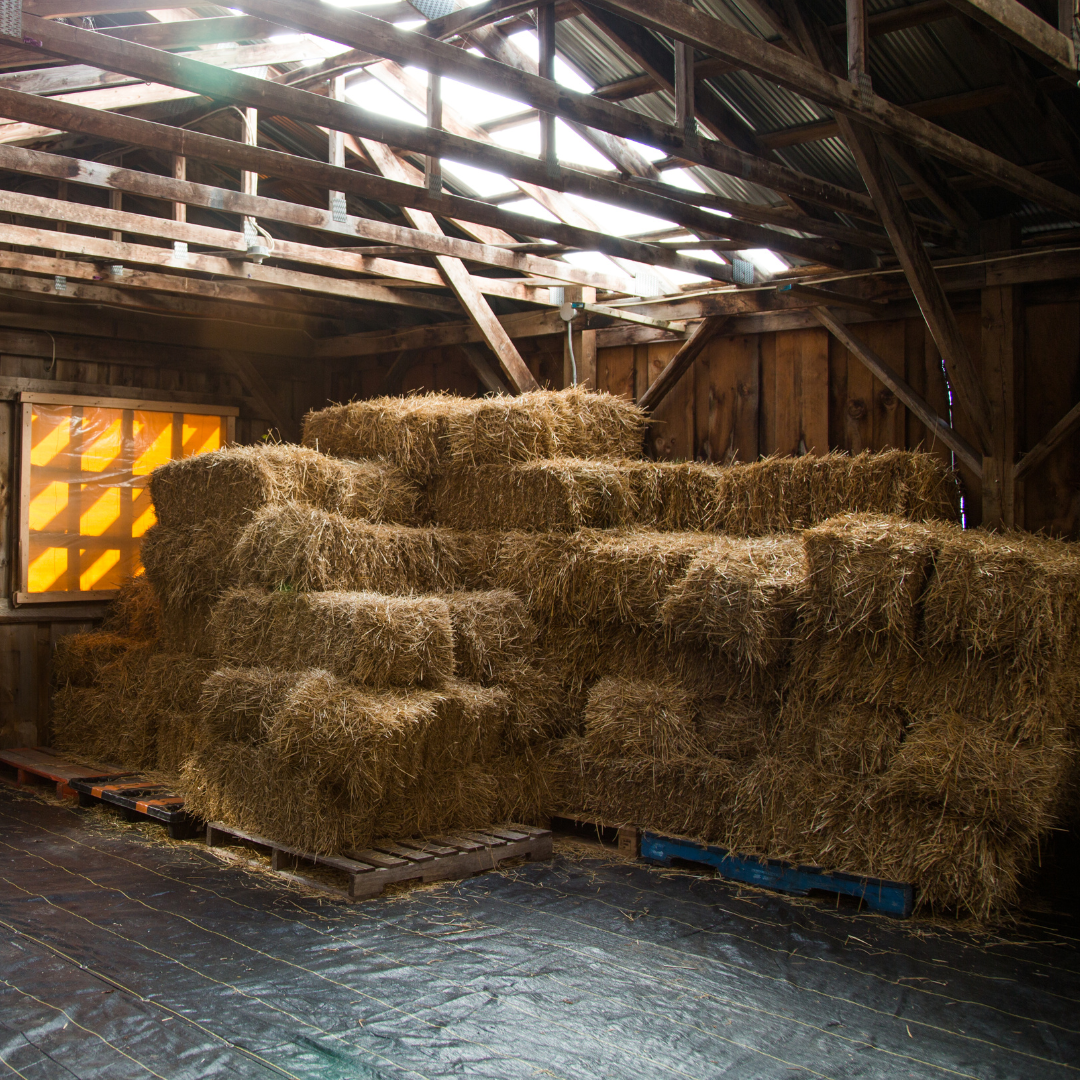
- Leave Breathing Room: Stack bales with small gaps between them to allow air to circulate. Avoid pushing stacks directly against barn walls; leave at least a foot of space around the perimeter.
- Alternate Directions: For square bales, stack layers in alternating directions (crisscross pattern). This locks the stack for stability while permitting better vertical airflow.
- Elevate Off the Ground: Never stack hay directly on dirt or concrete, as it will wick up moisture from the ground. Use wooden pallets, gravel, or old tires to break the contact and keep the bottom layer dry.
3. Prioritize Ventilation
A hot, stagnant barn is dangerous for hay storage. You need constant air movement to carry away the heat and moisture that naturally releases from the bales.
- Open Doors and Vents: Keep barn doors and ridge vents open to encourage a natural draft. The goal is to let hot air escape through the roof while drawing cooler air in from below.
- Install Fans: If your barn lacks natural airflow, consider using industrial fans to keep air moving over the stack. This is especially important during the first few weeks after harvest when bales go through their initial “sweat” period.
4. Monitor for Heat
Even dry hay generates some heat as it cures. It is vital to monitor this temperature regularly for the first six weeks after baling.
- Check Daily: Use a long-stem thermometer to probe deep into the center of the stack.
- Know the Danger Zones:
-
- 125°F: Monitor closely.
- 150°F: Dangerous. Check more frequently and prepare to move hay.
- 175°F+: Fire is imminent. Call the fire department immediately; do not move the hay yourself as introducing oxygen can cause it to ignite instantly.
Protect Your Investment with Lochte Feed
Safe hay storage keeps your livestock fed and your farm secure. Don’t let the Texas heat undo your hard work.
For more hay storage tips and supplies, visit us. Lochte Feed provides quality hay and shavings to the Fredericksburg community and Gillespie County. Come see our selection of coastal square bales and alfalfa. Alfalfa is sourced out of New Mexico to reduce the risk of blister beetles.
Looking for shavings? We provide quality Stablemate shavings, stop by the store and we’ll load you up.