Ingredients
Dehulled Soybean Mean, Ground Corn, Wheat Middlings, Porcine Meat and Bone Meal, Corn Distillers Dried Grains with Solubles, Calcium Carbonate, Sale, DL-Methionine, L-Lysine, Ferrous Sulfate, Choline Chloride, Vitamin D3 Supplement, Pyridoxine Hydrochloride, Thiamine Mononitrate, Manganous Oxide, Zinc Oxide, Folic Acid, Biotin, Ascorbic Acid (Vitamin C), Calcium Pantothenate, Vitamin E Supplement, Niacin Supplement, Riboflavin Supplement, Menadione Sodium Bisulfite Complex (Vitamin K), Sodium Selenite, Dried Aspergillus oryzae Fermentation Extract, Ethylenediamine Dihydroiodide, Colored with Iron Oxide, Calcium Iodate, Cobalt Carbonate, Manganese Sulfate, Zinc Sulfate, Basic Copper Chloride.
Feeding
Best Results
Feed Purina® Game Bird 30% Protein Starter Feed as at least 90 percent of the diet as follows:
Turkeys:
- If raising for meat, feed Purina® Game Bird 30% Protein Starter feed from 0 to 8 weeks. Then transition to Purina® Flock Raiser® feed.
- If raising for eggs, feed Purina® Game Bird 30% Protein Starter feed from 0 to 8 weeks. Then transition to Purina® Flock Raiser® feed from eight weeks to first egg (around week 28). Switch to a complete layer feed at the first egg.
Peacocks:
Feed Purina® Game Bird 30% Protein Starter feed from 0 to 6 weeks. After week 6, switch to Purina® Flock Raiser® feed. At the first egg, transition to a complete layer feed.
Game Birds:
- If raising for meat, feed Purina® Game Bird 30% Protein Starter feed for the first six weeks and then switch to Purina® Flock Raiser® feed until birds reach market weight.
- If raising for eggs, feed Purina® Game Bird 30% Protein Starter feed from day one until the first egg and then feed Purina® Game Bird Layer® feed.
- If raising for flight, feed Purina® Game Bird 30% Protein Starter feed from day one through week six and then switch to Purina® Game Bird Flight Conditioner.
Caution
Store in a dry, well-ventilated area protected from rodents and insects. Do not feed moldy or insect-infested feed to animals as it may cause illness, performance loss or death.
Management Practices
A feeding program is only as effective as the management practices followed.

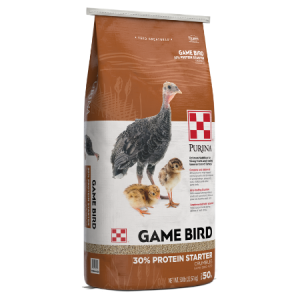 The Purina 30% Protein Starter Game Bird is formulated to help support the growth and development of game bird bones, muscles, and feathers. It also is ideal for supporting the proper foundation for your birds to have a strong start. Furthermore, feeding 30% protein helps support optimal growth and development. This feed comes in an easy feeding crumble, which helps support strong intake. As a result, poults and game bird chicks can grow into healthy adult birds.